Sunday, June 23, 2013

Rite of The Black Eagle Part 2 of 3

From our first article, the candidate was roughly handled and was accused of murder, and may had to have been executed for no other reason, then for a blood letting.  The candidate now enters into the second degree where he is more instructed than ceremonial, and learns of the Hermetic Parables.

The Officers and the general arrangements are identical in the second as in the first, during the opening the members are referred to as Princes who dwell in the Zodiac, they are reminded to be precise in their work of developing the three kingdoms of Nature.

The Candidate is now places in the West and has to express a desire to progress his education in the Order of the Black Eagle.  At this time the candidate is shown the method of moving from East to West by the steps of the four elements, and takes the Pledge of the Degree on his knees before the throne of the Master.

Grade Symbolism:

The lecture of this degree explains more about the degree that the candidate just went through, here are the six main points explained upon the trestleboard.

(1)It depicts the Chapter itself in the form of an oblong square, the greater extension being from East to West, because the sun never leaves the tropics and because antique science never left the poles.

(2) The grand circle in the centre of the diagram represents the Zodiac and its twelve signs encompass a dead body, being that of the Master-Builder, whom the "Great Work must bring back to life".  This is effected by the divine virtues of a Pentacle which vitalises dead matter.

(3) The sun signifies the end and object of the Rosy Cross attained in the Quest for that Sun of Life which insures the happiness of man in the present world and also in the world to come.

(4) The Blazing Star represents that stage of the work when the Matter assumes color.

(5) The fire on the alter signifies the elementary fire which purifies the three kingdoms of nature

Hermetic Parables

In the second place, the Master proposes such an instruction of the Candidate that he shall discover by his own efforts the principle of the life hidden in the heart of the matter known under the name of Alkahest (1), being a spirit of the four elements extracted from the three kingdoms of Nature.  But in the catechism which follows the heads of the consideration are these:

(1) That the Brethren must accompany the Sun in its journey through the twelve Houses of Heaven

(2) These Houses are governed by twelve sacred names
Blessed Raymond Lully
Doctor Illuminatus
Writer, poet theologian, mystic, mathematician,  martyr

(3) The twelve spirits operate therein by the will of the Supreme Being

(4) That the power of the Divine Name inscribed on the Grand Pentacle is that which moves the Universe, and hose who can pronounce it kabalistically shall have at their disposition the forces which dwell in the four elements, and will possess all virtues possible to man

(5) The Knights of the Black Eagle are called Brethren of the Rose-Cross in commemoration of the Rose Nobles made by their Brother Raymond Lully(2), a great Mason (note this is the ritual, not my personal view), the coins in question having a Rose on one side and a Cross on the other

(6) The work upon base metals for their transmutation into gold is performed by the Balance of Solomon, the use of which has been made known to many ancient and modern philosophers

(7)  Solomon made use of the squares of 5=25, the square of 3=9,, the square of 2=4, the cube of 2=8 and the square of 4=16, the numbers in question being said to represent weights

(8)  Whomever is initiated in the Kabalistic Art must be like unto the Maser-Builder, who chose death rather than betray the secrets committed to his charge

Closing the Chapter

When the chapter is closed in the Second Degree, the Master asks whether the work has progressed and the Matter has assumed form.  He is told that the elements are joined, the seven planets are shut up within the Sanctuary and are covered with a white veil.

(1:  Alkahest is a hypothetical universal solvent, having he power to dissolve every other substance, including gold.  It was much sought after by alchemists for what they they thought would be its invaluable medicinal qualities.  The name is believed to have been invented by Paracelsus from Switzerland.  Paracelesus' own recipe was based on caustic lime, alcohol, and carbonate of potash.  He believed that this element was the philosophers stone.  Interesting enough, Philalethes specifies that Alkahest dissolves only composed material into their constituent, elemental, parts.)

(2:  Raymond Lully (1232 - 1315) was a Majorcan writer, philosopher, logician and Fransciscan tertiary.  He wrote the first major work of Catalan literature.  Manuscripts have pointed to his centuries earlier election theory, and is considered a pioneer of computation theory.  He was a member of the Franciscan Order, he is honored as a martyr, he was beatified in 1857 by Pope Pius IX and his feast day was assigned to 30 June and is celebrated by the Third Order of Saint Francis.  Raymond Lully also had a strong mystical side, instanced in his work The Book of the Lover and the Beloved, written in order to illuminate weary, sterile souls.  He was also interested in, and wrote about astrology.  A synthesis of Lully's work was made by his disciple Thomas Le Myesier, in his Electorium.  In the early modern period Bernard de Lavinheta connected Lully with contemporary hermeticism.)

Tuesday, June 18, 2013

FOUNDING TREATY OF THE MASONIC CONFEDERATION OF FRANCE

As the slow gears of French Freemasonry move, the Masonic Confederation of France has now agreed for intervisitation between their combined 1700 lodges, and boasts a membership of over 51,000 members, which now makes it unofficially the largest Masonic body, regular or irregular operating in France.  This includes the Grand Orient of France and the disparaged GNLF.

Below is detailing this step towards the Masonic Confederation of France to move forward with requesting recognition through out Europe, and eventually to the UGLE.  It is my hope that we finally have some sense of regularity and recognition in France again.

FOUNDING TREATY OF THE MASONIC CONFEDERATION OF FRANCE

Preamble
Responding to the appeal of the Basel Declaration of June 10, 2012 the undersigned French Masonic Grand Lodges decided to gather under a Confederation called the
Masonic Confederation of France
Signatories of this Treaty, the founders are:
- The Grand Lodge of France
- The Traditional and Symbolic Grand Lodge Opera
- The Grand Lodge of the French Masonic Alliance 
- The Independent Grand Lodge of France
Meant as a Masonic covenant, the treaty expresses their friendship and mutual recognition among the signatories. It will be supplemented by a protocol for the use of their members concerning visitations and Masonic exchanges.
Each Grand Lodge is sovereign and independent in its identity and in its operation.
In accordance with the basic principles which they undertake to respect, the founding Grand Lodges pool and share operating procedures.
Civil statutes previously adopted in their Grand Lodge communications by the signatory Grand Lodges, then completed by Internal Bylaws specifying its mode of organization, guarantee the legal existence of the Confederation. Each Grand Lodge undertakes to respect, and to ensure respect of, the principles and rules by its members.
The Confederation shall be able to admit additional Grand Lodges, provided that they meet the criteria of Traditional Regularity as recalled in Article 1 of this Treaty. Their adhesion shall only be approved by an unanimous decision of the Confederation founders.
The Confederation will have statutory powers allowing it to decide an exclusion in case of non-compliance with the commitments defined in this Treaty.
Article 1
The Grand Lodges of the Masonic Confederation of France meet in full the principles shared by the Universal Masonic fraternity, which ensure its unity and are:
- Invocation of the Great Architect of the Universe,
- Presence in Lodge of the three Great Lights of Freemasonry: the Volume of the Sacred Law, in full view and open, the Square and the Compasses,
- Exclusive sovereignty over the symbolic degrees,
- Independence from any Masonic structure of Higher Degrees,
- No female presence during ritual workings,
- Prohibition of political or religious discussions,
- The progressive and spiritual character of the Masonic approach.
Article 2
The Freemasons of the undersigned Grand Lodges recognize each other by the obser­vance of the Royal Art that unites regular Freemasons worldwide.
Article 3
Each undersigned Grand Lodge establishes the procedures necessary to ensure compliance with the rules founding the recognition of the Confederation.
Article 4
Each Grand Lodge recognizes and respects the practices and customs of the other Grand Lodges of the Confederation, including the moral and spiritual values as well as the initiation rituals that are theirs and which it declares to perfectly know.
Article 5
The Confederation commits itself not to take any action likely to undermine the independence and functioning of each signatory Grand Lodge. However, in case of non-compliance with the fundamental principles shared by the Universal Masonic fraternity and stated in Article 1, or with the application of the rules of recognition mentioned in Article 3, and before an implementation of the statutory provisions for exclusion, the Confederation has the duty to notify the Grand Lodge concerned.
Article 6
The Confederation guarantees, especially regarding relations with foreign Masonic Grand Lodges, the regularity of the Grand Lodges which constitute it.
The Confederation elects or appoints, in terms defined in its statutes and Internal Bylaws and for a specified time, its representation in foreign Masonic Grand Lodges.
Article 7
Any communication on behalf of the Confederation will be defined beforehand by the representatives of each signatory Grand Lodge.
Paris, June 15, 2013:
- The Grand Lodge of France
- The Traditional and Symbolic Grand Lodge Opera
- The Grand Lodge of the Masonic French Alliance 
- The Independent Grand Lodge of France   

Sunday, June 16, 2013

The Rite of the Black Eagle - Part 1 of 3

When I find myself not writing for long periods of time, I get stagnate, then I don't want to write out of the anticipation of writing, it is a complete mess.  The cycle of not writing feeds to the procrastination of future writing.  Getting out of the habit of writing makes for lack of proper reflection and study for me.  To stop this constipation of writing, I wanted to plunge right back into it, and so I am writing about something I read about four months ago, and something that isn't readily available on the internet.

I want to apologize up front as this subject matter only has one author that I could find, so the information comes directly from A.E. Waite, the little known, but seemingly familiar story, added with aspects of Christian doctrine, philosophical Hermeticism in the terms of figurative alchemy, and some Kabalism thrown in for good measure.  Waite up front acknowledges that this "Rite" was never popular, nor did it have any real popularity in Freemasonry.  To Waite, this Rite represented the origins and a first swipe of sorts of the first three degrees as they are told in the Red Degrees, as they are called here in America.  After the first three degrees the order devolves shortly there after and is as Waite put it "militanty distant" from the high degrees.

The first degree is made up of three principle officers, the Grand Master, Grand Prior and Grand Warden.  The tracing board is set up in the following matter:

(1) Large amounts of Acacias in the vicinity where the unskillful assassins interned the Master Builders body.  

(2) A cloud descending from Heaven to conceal the place, so that the assassins can not find it again. 

(3) Nine candlesticks, by allusion to the Nine Elect Masters who were sent in search of the Master, as ordained by Solomon the King

(4) The Place of entombment

(5) The sun and moon which enlightened successively the Brethren who went on the quest, so that neither cloud nor darkness hinder them

(6)  The Blazing Star, which shone over the grave of the Master

(7) The triangle - inscribed with the initial letter of the Great Name of Mystery, which appeared when the body was exposed

(8) The eagle which guarded the grave for the space of nine days and which took flight with the legendary branch of acacia when the body was found.

The predominate color of the Chapter and clothing is black, with hints of gold, red and white.  Between the pillars of the East is a great Black Eagle, having the Sun on the right and the Moon on the left side.

The candidate is roughly handled and moved into a Chamber of Reflection. His is stripped of all their clothing, and is given a blood soaked garment to wear and a pair of slippers.  In traditional Chamber of Reflection his is left alone wearing nothing but what has been given to him and the door is guarded by two brothers who have swords drawn.

The officers start their procession into the apartment and the chief officers take their station.  The Master then cries out that an innocent man has been murdered, and his killer still lives.  This is in reference to the candidate who is then led into an apartment, blindfolded by the two guards.  The only light in the room is a dimly lite lamp.  At this time one of a brother is to assume to role of the corpse and lay on a table with a bloodstained apron.

The blindfold is removed from the candidate and is told to contemplate the remains of the  man who has perished on false suspicion of murder.  The candidate is then held in the room with the "corpse" alone and again guarded by two men with swords.  This is to see if the candidate will attempt to escape or somehow lose his fortitude when dealing with the situation.

The candidate is again blindfolded and the officers again in procession enter and this time the Warden says that the candidate has proven to be more unfortunate than guilty, that the great criminal is he who has suffered already, but that an accomplice has been found who also must die.  The perpetrator is under arrest already, is charged, and condemned.  All the officers depart except the Grand Prior, who takes off the blindfold of the candidate and leaves him with the corpse, again to reflect.  After a while the Grand Prior comes to the door, reblindfolds the candidate and leads him to the door of the Chapter, into which is is introduced as a worthy Mason who desires to become a Knight of the Black Eagle.  He is praised for his fortitude, is pledged on the Holy Gospels and receives the Secrets of the Grade, together with the insignia.

The Grade Lecture:

As in all of these Rites, there is an explanation of everything that happened to you.  I find the lecture amusing as this was less esoteric, far more hazing.  Seriously, locking a guy in a room and accusing him of murder, then knowing that he is not guilty, but has to die anyway?  Still the newly knighted Mason is given the following instruction:

1) The Chapter is hung in black to illustrate the impenetrable obscurity which must cover the mysteries of the grade

2) The Pillars are white to signify the candor of chivalry

3)  The the gold of their chapters and pediments represent the purity of the Order

4)  Their number is 12, by allusion to the sacred and Mysterious Names inscribed on the Pentacle of Solomon

5)  The clothin of the Brethren is black, to commemorate their grief for the murder of the Master-Builder, but is ordained with white in token of their innocence concerning it, and embroidered with red as a symbol of his blood poured out.

6)  There are batteries of knocks, six to be exact, this is to signify the six modes of pronouncing the Sacred Word kabalistically, but these modes are yet not revealed to the new knight in this degree.

The next article (Part 2) we will detail out the Second Grade, and the Hermetic Parables that are taught to the new knight. 

Friday, June 14, 2013

Ohio Freemasonry, An Experience

It was my pleasure this past week to travel to Dayton, Ohio and meet with several brothers, and enjoy their company.  On a whim last week I sent out an e-mail to the Fiat Lux list server announcing my visit to Ohio.  I  immediately was greeted by Right Worshipful Dan Hrinko.  Brother Hrinko's excitement, and hospitality was like nothing I never experienced in Freemasonry, and was truly awe inspiring.

Brother Hrinko and I met Monday evening at the famous Pine Club Steak House in Dayton Ohio, there we ate like kings and discussed the current topics of Freemasonry.  Brother Hrinko is a one percenter, a man who has intense passion for Freemasonry and the education of our newly initiated, passed and raised brethren.  His efforts in the state of Ohio is a testament to the passion he lives through the obligations we all took.  He has added serious substance to their Grand Lodge education program, and was founding Master of Arts and Sciences Lodge No 792.  This lodge is not your typical Traditional Observance lodge, nor a European Lodge, but was developed with an emphasis on the craft, and furthering its education.  When you talk to Broher Hrinko he can't help but be proud of all he has done with Arts and Sciences, and the impact it had on the Masonic culture of Ohio.

Brother Hrinko took me to Clark Lodge #101 and they extended to me the same Masonic welcoming that you expect as a traveling Mason.  I always enjoy spending time with men like Dan Hrinko, his passion for our craft and his depth of masonic education made being around him an absolute pleasure.  I honestly hope I get to see him again, and spend more time with him, as he further sharpens my mind.  Below are pictures from the Masonic Temple in Springfield, OH.  The building itself is impressive as it has a bowling alley, 4 lodge rooms, a museum, and a massive Commandrey conclave.  I have attached the pictures below to spread the wonderfulness of the Masonic temple.


Friday, March 22, 2013

A Small Milestone in the Blog

Recently (a couple of months ago actually) this blog received 50,000 hits, now really this is nothing in the internets and webpage hits.  Still for a blog that was mostly dormant for two years because of my deployment, and the fact that it is still going is its own little milestone.

When I started this blog in 2007, it was to document my journey as a freemason.  In 2007, there was something in the Masonic air as there were seemingly blogs being put up everywhere of newly made Masons, Masons that were in their line-up and some Past Masters.  Some of the most popular blogs have gone away, but still some, including Bro Chris Hodapp's blog which is read by most Masons on the internet.

Blogging about freemasonry is actually a pretty risky endeavor especially if you do it openly with your name attached.  While content will dictate some of this, for simply disagreeing with your Grand Lodge is considered by some to be a "Masonic Offense" copies are made, printed out, sent to Grand Secretaries.  It usually goes back to "Defaming the character and good name of a mason".  Also, some Grand Lodges have strictly forbidden their members to discuss masonic matters on-line, as a way to curtail public criticisms.

Masonic blogs have shaped so much of my Masonic journey to date, I have read articles and have met brothers through various blogs that I will continue to cherish.  I have also received e-mails from now-brothers and friends asking about Freemasonry, and if it made a positive impact on one man's journey to becoming a Freemason.

Here are some of the most popular posts on this blog:

Freemasonry in Iran

I wrote this post off of some information that was given to me, it was so sparse and there is little information on the web at the time regarding Freemasonry in Iran.  This post is by far the most popular, when this blog goes without a post, it is always number one.  Have received praise, questions, and incredibly more information about Freemasonry in Iran.

The response and seemingly craving for more information got me to search out every scrap of paper out there, including contacting academics currently teaching in Iran.  I need to compile it all and publish it somewhere, I just haven't found the right avenue, and the time to make it coherent.  I was going to push it to the Texas Lodge of Research, but current events have made me wary of that course of action.  Still, it is good information that needs to get out there, and shared with the profane and the mason.

Grand Lodge of Texas, Prince Hall, and Afghanistan

Shortly after arriving in Afghanistan after only leaving it six months before, I wrote this post.  I was homesick, tired and knew I had a long time in a warzone in front of me.  Frustrated with the relationship between the Grand Lodge of Texas and Prince Hall I wrote this as I was wanting to be at my lodges installation.  This subject is a constant theme in Masonic blogs across the internet.  Some men have unfortunately have used this divisive issue to grind their own axes, but it is a serious problem.

Even when all Grand Lodges in the US recognize Prince Hall, we will then have two recognized bodies and legitimate bodies of Freemasonry operating in America.  The inevitable merger is not a topic, but I foresee it being a topic in my lifetime, if I continue to pursue Freemasonry.  You can't have your cake and eat it too, and this is two different cultures when it comes to Freemasonry.  So all the states with recognition and inter-visitation, don't pat yourselves too hard on the back, the bigger challenge awaits us all.

The reason that this post got such a large number of hits is because Bro Chris Hodapp featured it on his blog.  Chris and I met in January 2009 when he came to speak at our lodges annual banquet.  I had a great time, and Chris is really a great and approachable guy.  A lot of masonic authors and men who have a large personality in our fraternity get so use to the sycophants that they become immediately offended if you aren't sweet as pie to them (to steal a southern phrase).

Chris and I kept in contact regularly until about a year and a half ago, I don't know what happened.  Chris, if you read this drop me a line when you get a chance, will you?

There are other posts, like my review of Jack Buta's book  which was a treat to write and also marked me finally joining the Scottish Rite.  Along with my self reflections on the degrees of the Scottish Rite, which I enjoyed writing very much.

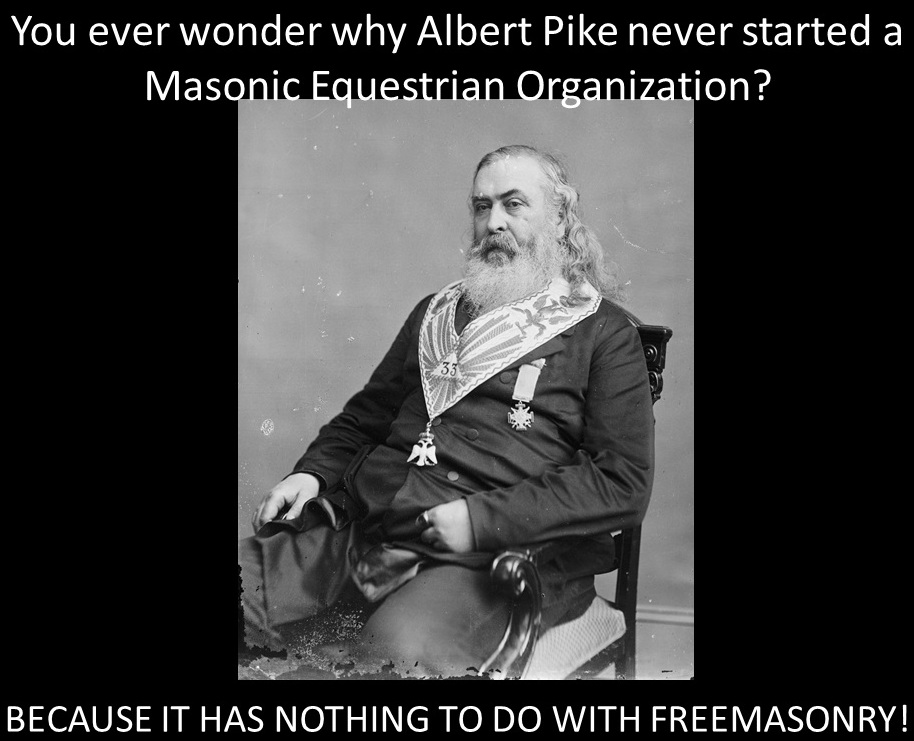
On the controversial side, I don't agree with masonic motorcycle or riding clubs.  I took a stand against the Texas Rangering Masonic Camps that were established as it was far more controversial than what we needed and does nothing to spread further light.

I do have dry spells, and for that I do apologize.  Life becomes overwhelming at times, but of the plethora of masonic blogs that were up and running (granted a good portion were socket puppets) I am glad to be one of the ones still standing.

Thank you for those that have written me, it means a lot.

S&F,
-Bro Vick   

Monday, February 18, 2013

Book Review "The 32 Secret Paths of Solomon - A New Examination of the Qabbalah in Freemasonry"

Okay, so let me start this review by saying I don't personally know the author.  While that shouldn't have to be said review of new Masonic books sometimes ( a lot of times) are done by men and women who personally know the author and want to give him/her a good review.  Go and look up recent Masonic publications on Amazon, and you will see what I mean.  The problem is that today, most anyone can publish either through an e-book or through hard copy.  So I believe I am as impartial as they come when it comes to  this review.

The Book "32 Secret Path of Solomon A New Examination of the Qabbalah in Freemasonry"  written by Bro Timothy Hogan is a quick primer and look at potential applications of the Qabbalah in Freemasonry.  Bro. Hogan wrote in the introduction:

"Within Freemasonry itself, in the fourth degree of the Ancient and Accepted Scottish Rite (SJ), we are likewise taught that qabbalah is the key to Freemasonry, and in fact, Freemasonry cannot be understood unless one has at least a preliminary understanding of qabbalah."

I was drawn to this book, as more and more books coming out about Freemasonry concern themselves with an historic account or accuracy of our Craft.  Either within a specific time period (Civil War, French Revolution, etc) or trying to explain the reality of the events depicted in our rituals as being either historic or rather "Masonic Tradition".  This book refreshingly does not attempt any of that, rather to give the reader the basic tools and understanding of the qabbalah in regards to western esoteric thought.  The challenge the author had is that qabbalahism is one of the most studied and written aspects of the Hebrews, and is very complex.  The author attempted to break it down simply in how it relates to our Masonic initiation, and how we may meditate and apply it when attempting to apply the rich ritualism and symbols we are taught.

My knowledge of qabbalah before reading this book is little to none, which made me the target audience for the author who wrote this pithy 96 page book as a quick primary to the qabbalah and how some of these concepts directly relate to Freemasonry.  The book does a good job of introducing what are very basic concepts of qabbalah, different schools of interpretation and explanation of the tree of life.  The author does a good job of picking concepts within qabbalahism such as the Sephir Yetzirah and the explanation of said concept.  Hogan also does a good job in relating the symbolism threads within the first three degrees of Freemasonry and qabbalah, and if you were not an initiated as a Freemason, would be somewhat confusing.

The down side of the book?  For 96 pages you pay $15 (or $10 if you own a Kindle).  Also, while someone did go through and edit the book, there are repeated phrases in the book like "I should also mention", which after a while I think the author is sending us code.  Also, there are some parts of the book that I don't understand, including his personal interpretation of the Tree of Life and the "correct path", which seems contrary to any rudimentary look up of the tree of life (along with his own incorporation of Tarot Cards).  It appeared that he started to make assertions, that were left unfinished, or under defended.

I would recommend this book as it is an excellent way to start examining your Masonic journey and the potential incorporation of the qabbalah.  It is also refreshing to see an honest look at applications of qabbalahism without it taking over all of your free time. 

Friday, January 25, 2013

The Death of a Rite

For the record, before I start this article, I have never been, nor was I ever approached to be a member of the Scottish Rectified and Reformed Rite.  As I posted in my blog a few months ago, the Rite was forbidden by our then Grand Master to take part of the degrees, even before that I was never contacted.  So I want to make it clear that I am on the outside looking in on this situation, and am confident that I don't know the facts as they are, but are my simple observations.

Those who have not read on Chris Hodapp's Blog the Grand Encampment is disbanding the Scottish Rectified and Reformed Rite in America.  While Most Eminent Grand Master Goodwin said that in his mind The Grand Priory of Occitania is a regular body, the questioning from Grand Lodges and aggressive actions taken that puts at risk the regularity of the Grand Encampment of Knights Templar could no longer be ignored.

The start of the Rectified Rite was always on shaky ground from controversy as to why Sir Knight William H Koon II attempted to bring the Priory to the United States.  Some claimed that Sir Knight Koon, brought the Priory to America because he was denied admission into the super exclusive CBCS, as to what he and others called a glorified supper club.  The Rite was brought over by Koon attempting to swoon high ranking national Masons to join his new camp, upset the established CBCS in America.  This started a turf war that has lasted for about 5 years regarding the regularity, including a recommendation from the COGMNA not to recognize the Rite.  It seemed to be somewhat put at rest when the Grand Encampment recognized the Scottish Rectified and Reformed Rite.  This only seemed to fuel some fires, caused threats of no longer recognizing the Grand Encampment in some jurisdictions, the tug of war continued until yesterday, when the Grand Encampment put out General Order No 4, folding the Scottish Rectified and Reformed Rite.

The bitterness over this aside, attempting to bring The Grand Priory of Occitania to America seemed to spark a small fire of interest in esoteric Christianity within Freemasonry.  Men who seemed to shirk the problematic identity of the Grand Encampment seemingly had a new interest in how masonic esoteric traditions in the 1800s can bring them to a closer to our Father and His son Jesus Christ.  Suddenly the posts of how the perception of Christian Orders within Freemasonry are not inherently unmasonic, but a new interest in the Martinist Orders sparked further interest in esoteric, and Rosicrucian ideals within the family of Freemasonry.  For this fact alone, I don't see the introduction of these orders to America while problematic, not completely in vein.

The spreading of light is never a bad thing, even though this time it came with some bigger than life drama.  I hope that the men who had an interest or were apart of this order continue on their path.  I hope that men like myself that have never touched the order continue our independent pursuits of esoteric Christian ideals within the body of Freemasonry.

 To quote the old saying "You win some, you lose some".

S&F,
-Bro Vick

Monday, January 21, 2013

Sunday, January 13, 2013

Richard, My Brother, My Friend

Freemasonry in its current state means that younger Masons such as myself become close to men who are 40 years our senior, and feel their loss much more than the average American, I was reminded of this fact again this past Saturday, when I received the phone call that my brother, and friend Richard Adaszczyk passed away.

In 2006 when my job ended in Laredo, TX I thought it was time I became a Mason.  When my Grandmother died in August of 2006 my mother gave me all of my Grandfather's Masonic goods.  I read some about the fraternity, and really thought that this is where I want to be going.  I found a lodge through the Grand Lodge of Texas Website, called Army Lodge #1105.  I sent Richard who at the time was the Secretary of the Lodge, an e-mail requesting more information.  He called me a day later as I was packing out of Laredo, the conversation went something like this:

Me: "Hello?"

Richard: "This Vick?"

Me: "Yes, who is calling?"

Richard "This is Richard Adaszczyk from Army Lodge, you wanted to know more about being a Mason?"

Me: "Yes, I do"

Richard "So what do you want to know?"

While this conversation may seem confrontational to most, I realized that bound that we had at that moment that can't be described to most men.  A young officer interacting with a hardened SNCO, trying to steer the young officer, but being hard at the same time.  He told me where to show up on the second Tuesday of the month around 1800, to meet some of the guys.

I was nervous, I showed up and sat in the parking lot.  After being waived in, I went to our lodge office and there were 5 men in there, and Richard was sitting behind the desk and said "Who are you?"  I responded "I am Vick, I talked to a Richard Adaszczyk?"  I butchered the pronunciation of his name he then corrected me and said "So you want to know about Masonry?  There is over a hundred years of Freemasonry in the room, what do you want to know?"  I asked him about the lodge and he started to explain.

He was gruff, and to the point, again there was the bound between SNCO and young officer.  He gave me an application and told me to fill it out.  When I asked about costs for the fraternity I thought it would be in the thousands, it was nothing, and he told me "Don't worry about it, you are young.  A working professional"

After initiation  my instructor, and Masonic inspiration, Garland Kreger said about Richard "I could call him up in the middle of the night on Christmas Eve, needing his help.  He would cuss, complain, but would come out and help me out."

I can't think of a better way to explain Richard.

Richard became apart of the three great pillars in my Masonic mentoring, the mentors I learned to count on and lean on understanding my masonic journey.  Richard recognizing my interests in Freemasonry beyond the memorization encouraged me to present more about Freemasonry in lodge, my first presentation of Freemasonry was on the Traditional Observance Lodge movement in America.  He was skeptical of the movement, and again asked hard questions, but than there was  that unspeakable bound of brotherhood and service to this country.

When the deployments to Afghanistan started, unfortunately Richard's and I relationship changed and not for the better.

I became disconnected from my brothers, and especially Richard.  It doesn't help that when you are in a warzone you carry a very large chip on your shoulder.  You feel like everything you do is in vain, you see death all around you, it becomes so futile.  So any interaction from home becomes overly hurtful when not sweet and loving.  Richard was never sweet and loving, but he cared, and he cared a lot.

In December 2011 when I was elected as Senior Warden to Army AMD Council #373, Richard came as our treasurer   We sat in the office and talked, and I expressed some of my issues.  He was sympathetic and pretty much told me he had no idea.  It really helped me move on, whether he knew it or not.

In spring of 2012 I sat in lodge for the last time to date, during that stated meeting I sat next to my mentor, my friend and my brother, Richard Adaszczyk.  I put my arm around him and enjoyed his company.  I for the first time, in a long time, felt at home in my mother lodge.  I didn't go back after that, not out of any conscious choice, because life became busy for me, and my other vocational and Masonic obligations.

I have lost a lot of friends and soldiers in my life, I have lost men to suicide, drug addiction, the hands of our enemies and pure accident.  Those are hard pills to swallow.  Richard wasn't doing well for a while, and we all knew it.

Still, I don't want to go back in that lodge room, open it in a EA, FC or MM without him there.  I know I will sooner or later, but it just doesn't seem right

I am thankful to God for being blessed to know Richard Adaszczyk.  He initiated me into this great fraternity, encouraged me and guided me.  He has become ingrained in my Masonic journey and was acting WM when I was initiated, and I am so happy for that.

So as I move forward with things, and my Masonic journey, Richard will always be alive and a corner stone in my Masonic foundation.

Thank you Richard and I know you are in the comfort in the bosom of God and his Son Jesus Christ.

S&F,
-Bro Vick

Saturday, January 5, 2013

University Masonic Lodge Foundation

For those who read this blog that are in the South Texas area University Lodge #1190 will be having their Festive Board 17 January 2013.  Their guest speaker will be Bro Chris Hodapp, it should be an exciting night!

For more information please send an e-mail to foundation @ universitylodge.org


I look forward to seeing all of the brethren there!

S&F,
-Bro Vick